Samsung’s Note20 Ultra Variable Refresh Rate Display Explained

In August 2020, Samsung launched the new Note20 Ultra – an interesting device that we have on our review test bed. It’s safe to say that over the last few generations, there hasn’t been all that much exciting about the Note line of devices – the phones typically use the new silicon and camera technologies that were introduced in the Galaxy S-series of the same year, and the Note lends on its form factor, only improving upon the design and software experience around the S-Pen. This year’s Note20 Ultra, based on our testing, generally also follows the same formula, but with the important exception: the Samsung Note20 Ultra has, according to the company, the first mobile variable refresh rate (VRR) screen in the industry.

What is Variable Refresh Rate, or VRR

The refresh rate, in its broadest definition, is a property given to a display with regards to how frequently a display will update itself with the latest data supplied from the graphics processor. A standard display, either on a smartphone or on a computer monitor, often refreshes at 60 times per second, or at 60 Hz, with the delay between each frame at 16.66 milliseconds. This 60 Hz is a static refresh rate, and fixed for the lifetime of the product. Over the last decade, display manufacturers have built screens with different refresh rates depending on the content: for content that is static, the display could choose to refresh at 33.33 milliseconds, or 30 times per second, and save power; for content that is active, like a video game, if the game can be rendered quickly enough, the display could refresh at 13.33 milliseconds (75 Hz) or 11.11 milliseconds (90 Hz) or 8.33 milliseconds (120 Hz).

Displays can also be made with multiple different refresh rates. Depending on the product, such as a simple PC monitor, then both 30 Hz or 60 Hz might be supported. Gaming devices might go the other way, and offer modes that run at 30 Hz, 60 Hz, 90 Hz, and 120 Hz, all within the same panel. These modes might be user selectable, or activate when specific applications are running. In the gaming ecosystem, these are known as ‘high refresh rate’ displays.

Where variable refresh rate displays differ is that they can often support a wide range of frame time delays on a very granular basis. On the specification sheets for these displays, the refresh rate might be give as a range, such as ’60 – 90 Hz’, incidicating that the display can support any value between these two numbers. The better displays strive to support larger ranges, however when it comes to the smartphone market, the term ‘variable refresh rate’ has been a bit abused in recent times, as there are two ways to implement a variable refresh rate display.

The two methods are known as:

Seamless Variable Refresh Rate

Refresh Rate Mode Switching

The difference between the two is important. In a Seamless VRR display, the refresh rate is expected to change on a frame-by-frame basis as required by the system. For a ‘VRR-enabled’ but non-seamless display, it relies on changing the refresh rate mode between different values – the display panel will operate in either a “normal” or “high-refresh-rate” mode, but the switching between the modes is not a continuous process. For these panels, the ‘range’ of the refresh rates supported is fairly discrete, such as fractions of the main refresh rate, whereas a Seamless VRR display is designed to be a continuous support from a standard refresh rate to a high refresh rate with all in-between.

For the most part, smartphone vendors have been playing down which one of these two they have been using, advertising both as ‘variable refresh rate’. If a phone vendor has claimed to support variable refresh rate, it has been misleading, as no device until now has supported a ‘seamless variable refresh rate’ that switches on a per-frame basis, which is typically what we would consider a true VRR solution to be. What these companies are doing instead is that they are using refresh rate mode switching, which is a rather important distinction.

Samsung Note20 Ultra: Seamless VRR

By contrast, Samsung with the new Note20 Ultra claims to have achieved seamless VRR, and I’ve been very curious to get my hands on a device and finally unveiling how this is implemented and if it delivers on its promises.

Starting off, the first thing a user might notice on the Note20 Ultra, compared to an S20 device, is that its high-refresh-rate mode is called “Adaptive” rather than “High”. The decription text is specific in that it now states the refresh rate will go “up to” 120Hz instead of outright stating 120Hz on the S20 series devices. So far so good.

Investigating Seamless VRR

Digging into the software, we find some key indications on Samsung’s display mode options.

I/DisplayManagerService: Display device changed: DisplayDeviceInfo{“Built-in Screen”: uniqueId=”local:19261213734341249″, 1440 x 3088, modeId 1, defaultModeId 1, supportedModes [ {id=1, width=1440, height=3088, fps=60.000004}, {id=2, width=1440, height=3088, fps=48.0}, {id=3, width=1080, height=2316, fps=120.00001}, {id=4, width=1080, height=2316, fps=96.00001}, {id=5, width=1080, height=2316, fps=60.000004}, {id=6, width=1080, height=2316, fps=48.0}, {id=7, width=720, height=1544, fps=120.00001}, {id=8, width=720, height=1544, fps=96.00001}, {id=9, width=720, height=1544, fps=60.000004}, {id=10, width=720, height=1544, fps=48.0} ]

From a software perspective, you’d normally expect Samsung’s advertised refresh rate modes from 1Hz to 120Hz to be exposed to the system, however this is not the case, and the phone features the same resolution and refresh rate modes that were also available on the S20 series. As from the data above, this means 48 Hz, 60 Hz, 96 Hz, and 120 Hz.

However, the key difference between the S20 series and the Note20 Ultra is that its refresh rate mode is described as operating in “REFRESH_RATE_MODE_SEAMLESS” instead of “REFRESH_RATE_MODE_ALWAYS”. In that regard it does look like things are working correctly.

However one key component of variable refresh rate displays are the lower refresh modes to help save power. As shown on the list above, the ‘lowest’ refresh rate advertised is 48 Hz. So I went searching.

2020-09-07 19:42:16.764 948-948/? I/SurfaceFlinger: setActiveConfig::RefreshRate: ID=2, Width=1080 2020-09-07 19:42:21.758 948-948/? I/SurfaceFlinger: setActiveConfig::RefreshRate: ID=4, Width=1080

When interacting with the phone, it is possible to catch when the OS switches its refresh rates. For the above log, I was in the Samsung browser on a webpage – a situation I would expect to be in a high refresh rate when scrolling, but a lower fresh rate when idle, and a smooth seemless transition between the two. When I tapped the screen to interact with it and scroll, the system switched over to 120Hz refresh rate (represented with ID=2). Four seconds later, it switched back to a 60Hz mode (shown as ID=4). This is actually quite odd in that this really isn’t what you’d expect from a seamless VRR implementation – these would appear to be preset refresh rate modes baked in into the operating system and integrated with user interactions.

Perhaps more importantly from a battery life perspective, we would expect the switch down to the lower refresh rate to happen almost immediately, within a frame or two. The 4-second delay from the phone being in the 120Hz mode and then being placed into the 60 Hz mode, even though it’s a static screen, isn’t what we expect from a VRR implementation, seamless or otherwise – it should happen essentially immediately on the following frames of any kind of animation, interaction, or screen movement. This needed more investigation.

It All Comes Down To New Panel Technology

Researching things further, and diving into the display panel’s drivers, we find a few further mentions and evidence of Samsung’s newer panel technology found in the Note20 Ultra. First of all, we have confirmation that Samsung calls the new panel technology “HOP” – which we assume stands for the rumoured ‘Hybrid Oxide and Polycrystaline’ technology that Samsung has been teasing. This is similar to LTPO (Low Temperature Polycrystalline Silicon), but uses a new backplane technology that allows for faster switching transistors, also lowering power consumption.

Furthermore, Samsung’s key feature in achieving lower refresh-rate seems to be dubbed “LFD” or low-frequency-drive. At first, it’s a bit confusing as LFD doesn’t really seem to have any kind of interaction with the user-space VRR implementation. From our analysis, LFD seems to be something that solely works at the panel and display driver (DDIC) level.

Based on the output shown below, the LFD operating modes do showcase that it is programmed to work with Samsung’s advertised low operating frequencies, all the way down to 1Hz. The low frequency driver operation also seems to be a sub-mode underneath the higher level VRR operating modes, with these being the actual modes that the phone switches between in a finer manner using the MIPI-DSI interface.

/* 8. Freq. (60h): frequency in image update case (non-LFD mode), HS: 24hz~120hz, NS: 30hz~60hz * – 48HS VRR mode: * 48hz : 00 01 : div=2 * 32hz : 00 02 : div=3 * 24hz : 00 03 : div=4 * 12hz : 00 07 : div=8 * 1hz : 00 5F : div=96 * * – 48NS VRR mode: turn off LFD * * – 60HS VRR mode: * 60hz : 00 01 : div=2 * 40hz : 00 02 : div=3 * 30hz : 00 03 : div=4 * 24hz : 00 04 : div=5 * 10hz : 00 0B : div=12 * 1hz : 00 77 : div=120 * * – 60NS VRR mode: * 60hz : 00 09 : div=1 * 30hz : 00 01 : div=2 * * – 96HS VRR mode: * 96hz : 08 00 : div=1 * 48hz : 00 01 : div=2 * 32hz : 00 02 : div=3 * 24hz : 00 03 : div=4 * 12hz : 00 07 : div=8 * 1hz : 00 5F : div=96 * * – 120HS VRR mode: * 120hz : 08 00 : div=1 * 60hz : 00 01 : div=2 * 40hz : 00 02 : div=3 * 30hz : 00 03 : div=4 * 24hz : 00 04 : div=5 * 11hz : 00 0A : div=11 * 10hz : 00 0B : div=12 * 1hz : 00 77 : div=120 */

The driver comments note that the Note20 Ultra’s panel is capable of “self-scanning”, and that in order to maintain the lower frequency refresh rates it makes use of frame insertions for non-changing content. It looks like this is based on a fixed set of frequency multiples and dividers, so the mechanism isn’t capable of arbitrary refresh rates, but has a fixed set of operating frequencies below the maximum 120Hz. This ultimately puts it somewhere between the ‘mode switching’ and Seamless VRR definitions, however with the granularity it does offer a wider array of refresh rates for the display than almost all (if not all) smartphones on the market today.

One problem (from our perspective) with this LFD mechanism is that it is seemingly completely transparent to user-space, so there’s no good way to verify that it’s active or working – the OS simply states that you’re either in the 120Hz or 60Hz VRR modes, however with LFD on top the actual refresh rate can be different. One way to verify this externally is simply to measure the end-result that the new panel technology is meant to bring to the user: lower power consumption. It’s also here that we encounter some of the quirks in Samsung’s implementation.

Confirming Seamless VRR: Measuring Display Power Consumption

At first when I got my hands on the Note20 Ultra, I was somewhat disappointed when the results I obtained for power wasn’t any different to the S20 series between the 60 and 120Hz modes. Everything looked and measured the same, with a large power penalty kicking when switching over to the 120Hz mode, even on static screen content. This was the one scenario where the new VRR mechanism was supposed to bring great benefits.

I had reached out to Samsung Display about the matter, under the assumption that perhaps Samsung Mobile had not implemented the VRR as advertised. Initially I received back some questions asking me about the test conditions, among which they also asked about the ambient brightness, which I found weird thing to ask.

Sure enough, altering the ambient brightness in my office / the brightness level that the phone’s light sensor picks up, does dramatically change the power behaviour of the phone. Here is a video showing the effect of the ambient brightness adjusting the power used by the display, where I cover the light sensor with a block.

When displaying a pure black static image in the phone’s Gallery app, I saw a drastic change in power consumption between when the phone is in a brighter environment compared to when you cover up the top part of the device and the light sensor.

Looking into more detail through the phone’s OS logs, the device does look to actively track the light sensor values all the time, even when in manual brightness, and enters a special mode when it senses a darker environment:

In particular, it looks like whenever the phone senses an ambient brightness level below 40 lux, it will force the phone to only operate in its 120Hz modes, with an additional flag that also sets the minimum refresh rate to 120Hz. By contrast, in a higher brightness setting, the “normal” operating mode has what looks to be a minimum of 48Hz.

The power behaviour measured on the phone now seemingly makes a lot more sense, and in a little “D’oh” moment I also realised that when I first measured the device the phone had this low brightness flag all the time as it was measuring below 40 lux in my office. It turns out that the time of day you work in, and the brightness of whereever you work, will now affect the power consumption of the display on your phone.

Measuring the base power consumption of the phones again, under different lighting conditions, we see the first factual evidence of Samsung’s new VRR/LFD benefits:

When in a dark environment, and forced into the 120Hz mode, the Note20 Ultra’s power consumption isn’t all that different from the S20 series (I’m still not sure why the Snapdragon S20U here fares so badly). This means that there is a large ~180mW power penalty that is present at all times, even on a black static screen, because of 120 Hz. That penalty comes from the measured power, with 640 mW and 465 mW in the respective 120 and 60Hz modes.

When under a little brighter ambient conditions, the panel is finally allowed to showcase its technology advantages, and power consumption drops drastically. In the 120Hz mode but with the minimum refresh rate now in the regular ’48 Hz’ setting, the power figure drops from 640mW to 428mW, which is a massive 220mW drop.

The 60Hz mode also seems to see a power benefit as well. In our tests, the power consumption drops from 465 to 406 mW. This would indicate that indeed LFD is working in the background and reducing the panel’s refresh rate to below 60Hz – although we have no way to accurately measure exactly how low it goes.

It Also Depends On The Content

As noted, having the phone operating under dark conditions does look to disable the ‘seamless’ variable refresh rate display, and consequently the operation that allows the phone to go into lower frequency modes.

But that’s not exactly correct in all circumstances.

In the above video snippet, we see that the device still kicks back in into a low refresh rate as long as the on-screen content and brightness exceeds a certain level, even if the light sensor measures 0lux.

The problem is that this isn’t based on the specific screen brightness level that the user might select, or the auto-brightness might choose. It actually relies on the screen content too, which affects the screen brightness, as the phone will also jump between switching back into low-frequency mode or staying at a more power hungry high-frequency mode. In that instance, the the refresh rate mechanism is based on the average picture level (APL) as well.

The Effect on Battery Life

Based on everything we’ve learned so far, it comes to pass that there are now four corners to the battery life on the new S20 Ultra:

Set at 120 Hz in user options, low ambient brightness (low lux)

Set at 120 Hz in user options, high ambient brightness (high lux)

Set at 60 Hz in user options low ambient brightness (low lux)

Set at 60 Hz in user options, high ambient brightness (high lux)

Each variant, due to Samsung’s seamless VRR implementation (which is only seamless in high brightness and/or bright content), will give a different level of battery life. Make sure to ask your favorite smartphone reviewer which one they are using.

In terms of our battery life tests, in order to showcase the differences in the results for the Note20 Ultra, I first fell back to PCMark. Here we see some mixed results.

In terms of absolute figures, the phone doesn’t get great results – it comes below the S20 series devices. It is worth nothing that the Note20 Ultra has a 10% smaller battery than the S20 Ultra, as well as a different processor – the new Snapdragon 865+ in the Note20 Ultra is more power hungry and less efficient than the regular Snapdragon 865 in the S20 Ultra, but both of these aspects are something to be covered in the full review.

When it comes to the difference in the battery runtimes between running the phone in a dark or a bright environment, we do see differences, albeit they’re somewhat small. In the 60Hz maximum refresh mode, VRR/LFD gains the phone an additional 4% of battery life. In the 120Hz mode, we see a larger 8.5% jump in runtime.

Looking at the power draw graph in PCMark in the 120Hz modes, we do see a drop in power from an average of 1.937W to 1.796W at 200cd/m² screen brightness. The one thing to note here is that there’s no material difference during the video editing section of PCMark, with the power results been the two modes falling within 21mW. What this points out to is that in more regular non-video content the battery life gains could be larger than what’s experienced here in this battery test.

First Impressions

Overall, I think Samsung’s new display technologies, such as the VRR and LFD on the Note20 Ultra, make for a big leap in terms of the capabilities of high-refresh rate smartphones today. However there are quirks, and the biggest negative here is the fact that underneath a certain ambient brightness, Samsung disables its VRR. 

At a 40 lux ambient brightness, which is still relatively bright for indoor use-cases, we can see the VRR disabled. Users can download a lux meter app right now for their current smartphones and test it around the environment to see which scenarios apply and which don’t. Personally this is a bit disappointing, as the biggest advantage of an VRR implementation was to get rid of the fixed large power penalty of the 120Hz mode – a penalty which in absolute terms represented a bigger power draw percentage during lower brightness usage of a device. This is compared to high on-screen brightness conditions, where power draw is dominated by luminance power, where the 120Hz penalty represented a smaller percentage of total power, and thus represents a smaller gain thanks to VRR.

The good news is that Samsung introduced a technology that is, from our perspective, software agnostic. There are some interactions between the higher level VRR on the OS side and the lower-level LFD technology on the panel side that we wish there was more insight to at the user level, however it’s a nice technological leap which manages to narrow the power penalty of higher refresh displays, and in turn should further popularise the feature.

So the final question is as to why Samsung has this VRR limitation in low ambient light conditions? I have reached out to Samsung Display to find out why this limitation exists, but I haven’t heard back yet. I should note that ‘faking’ a bright environment via shining a light onto the light sensor didn’t result in any noticeable picture quality differences at any brightness – but I’m sure there’s some corner case out there which does result in some degradation as otherwise I can’t explain the limitation’s existence.

We will be following up with a full Note20 Ultra (Snapdragon S865+) review soon.
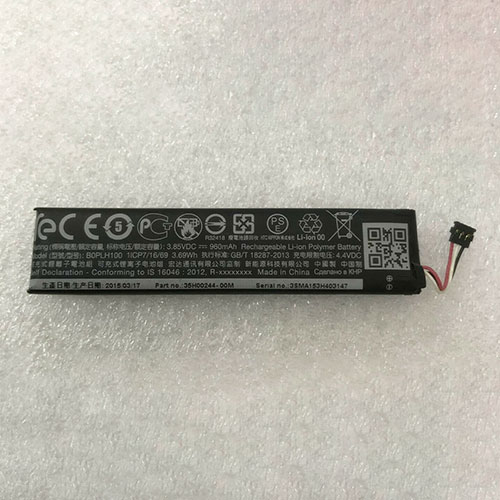
Cheap Htc B0PLH100 Li-ion Other battery, Brand New B0PLH100 replacement battery for HTC Vive Handle Controller VR

960mAh 3.85V Htc B0PLH100 Batteries for HTC Vive Handle Controller VR, Htc B0PLH100 Other battery is a brand new,100% Compatible original and replacement Laptop battery,Purchase wholesale and retail B0PLH100 with high quality and low price!

B0PLH100 Battery htc Li-ion 3.85V 960mAh

B0PLH100

Specifications

  • Brand:HTC
  • Capacity :960mAh
  • Voltage :3.85V
  • Type :Li-ion
  • Battery Cell Quality: Grade A
  • Descriptive: Replacement Battery – 1 Year Warranty
  • Description: Brand New, 1 Year Warranty! 30-Days Money Back! Fast Shipping!

How we test this Htc B0PLH100 Battery Li-ion 3.85V 960mAh

Step 1: Make sure customer bought the correct battery.
Step 2: Check battery’s appearance and interface.
Step 3: Test battery charger and recharger function.
Step 4: Charger the battery to 100% and recharger to 0% to get real battery capacity
Step 5: Use Ev2300 to check the voltage difference of each goroup cells.
Step 6: Charger battery power more than 30%.
Step 7: Package battery carefully and send out

Compatible Part Numbers:

BOPLH100 B0PLH100

Compatible Model Numbers:

HTC Vive Handle Controller VR

How much do you know about how to run laptop well as any place? The follow Tips cut way back on protecting battery life.


1). Please recharge or change your Other battery when battery power low.
2). Using Li-Ion Replacement Htc B0PLH100 Other Battery for your notebook which can work longer time than Non Li-ion one.
3). It is better to defragmentation regularly for your Other battery life.
4). In order to reduce the laptop power consumpition, you can use some optical drive spin-down and hard drive in your Other .
5). Please keep your laptop in sleep or standby model without long time using, which both save the Replacement Htc B0PLH100 Other Battery power and extend battery using life.
6). Leave your battery in a dry and cool condition when without using.
7). When you rarely or generally plugged in fixed power using, Please take down your battery to avoid hurting battery life.

Hot Products

11.1V/12.4v 2300mah BOSE 404600 for Bose SOUNDLINK I II III7.4V 2230mAh/17Wh BOSE 063404 for 0634043.7V/4.2V 1750MAH/6.5WH AMAZON GP-S10-346392-0100 for AMAZON KINDLE 3 3G WIFI Kindle3.8V 6300mAh/23.94Wh AMAZON 2955C7 for Amazon Kindle Fire HD 10.1 7th15.4V 5209mAh RAZER RC30-0248 for RAZER Blade 15 2018 RZ09-023863.8 V 1300 mAh AMAZON MC-305070 for AMAZON Kindle Voyage7.7V 37Wh/4810mAh ACER AP16M5J for ACER A315-51-51SL N17Q1 SERIES3.85V/4.4V 3080MAH/11.86WH ALCATEL TLp030JC for Alcatel A3 XL 9008j7.4V 2230mAH/17Wh BOSE 061384 for BOSE SOUNDLINK Mini Series3.8V 2930mAh/11.1Wh NETGEAR W-7 for Netgear AirCard 790S 790SP 810

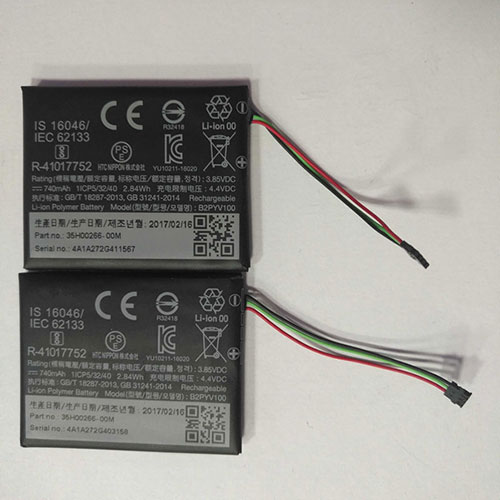
Cheap Htc B2PYV100 Li-ion Other battery, Brand New B2PYV100 replacement battery for HTC Vive Tracker Acumulator 3 Wire Plug

740mAh/2.84Wh 3.85V Htc B2PYV100 Batteries for HTC Vive Tracker Acumulator 3 Wire Plug, Htc B2PYV100 Other battery is a brand new,100% Compatible original and replacement Laptop battery,Purchase wholesale and retail B2PYV100 with high quality and low price!

B2PYV100 Battery htc Li-ion 3.85V 740mAh/2.84Wh

B2PYV100

Specifications

  • Brand:HTC
  • Capacity :740mAh/2.84Wh
  • Voltage :3.85V
  • Type :Li-ion
  • Battery Cell Quality: Grade A
  • Descriptive: Replacement Battery – 1 Year Warranty
  • Description: Brand New, 1 Year Warranty! 30-Days Money Back! Fast Shipping!

How we test this Htc B2PYV100 Battery Li-ion 3.85V 740mAh/2.84Wh

Step 1: Make sure customer bought the correct battery.
Step 2: Check battery’s appearance and interface.
Step 3: Test battery charger and recharger function.
Step 4: Charger the battery to 100% and recharger to 0% to get real battery capacity
Step 5: Use Ev2300 to check the voltage difference of each goroup cells.
Step 6: Charger battery power more than 30%.
Step 7: Package battery carefully and send out

Compatible Part Numbers:

B2PYV100

Compatible Model Numbers:

HTC Vive Tracker Acumulator 3 Wire Plug

How much do you know about how to run laptop well as any place? The follow Tips cut way back on protecting battery life.


1). Please recharge or change your Other battery when battery power low.
2). Using Li-Ion Replacement Htc B2PYV100 Other Battery for your notebook which can work longer time than Non Li-ion one.
3). It is better to defragmentation regularly for your Other battery life.
4). In order to reduce the laptop power consumpition, you can use some optical drive spin-down and hard drive in your Other .
5). Please keep your laptop in sleep or standby model without long time using, which both save the Replacement Htc B2PYV100 Other Battery power and extend battery using life.
6). Leave your battery in a dry and cool condition when without using.
7). When you rarely or generally plugged in fixed power using, Please take down your battery to avoid hurting battery life.

Hot Products

11.1V/12.4v 2300mah BOSE 404600 for Bose SOUNDLINK I II III7.4V 2230mAh/17Wh BOSE 063404 for 0634043.7V/4.2V 1750MAH/6.5WH AMAZON GP-S10-346392-0100 for AMAZON KINDLE 3 3G WIFI Kindle3.8V 6300mAh/23.94Wh AMAZON 2955C7 for Amazon Kindle Fire HD 10.1 7th15.4V 5209mAh RAZER RC30-0248 for RAZER Blade 15 2018 RZ09-023863.8 V 1300 mAh AMAZON MC-305070 for AMAZON Kindle Voyage7.7V 37Wh/4810mAh ACER AP16M5J for ACER A315-51-51SL N17Q1 SERIES3.85V/4.4V 3080MAH/11.86WH ALCATEL TLp030JC for Alcatel A3 XL 9008j7.4V 2230mAH/17Wh BOSE 061384 for BOSE SOUNDLINK Mini Series3.8V 2930mAh/11.1Wh NETGEAR W-7 for Netgear AirCard 790S 790SP 810

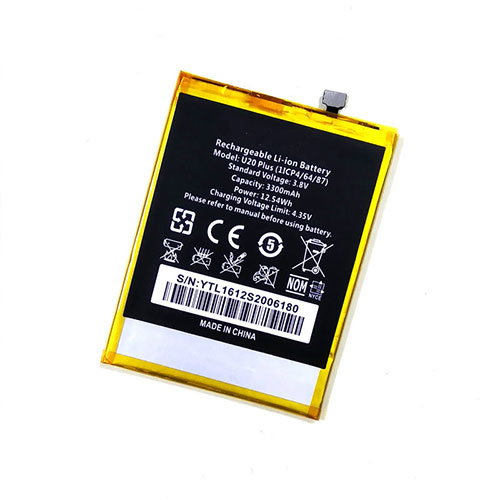
Cheap Oukitel U20Plus Li-ion Cell Phone battery, Brand New U20Plus replacement battery for OUKITEL U20 Plus Phone

3300mAh/12.54 3.8V/4.35V Oukitel U20Plus Batteries for OUKITEL U20 Plus Phone, Oukitel U20Plus Cell Phone battery is a brand new,100% Compatible original and replacement Laptop battery,Purchase wholesale and retail U20Plus with high quality and low price!

U20Plus Battery oukitel Li-ion 3.8V/4.35V 3300mAh/12.54

U20Plus

Specifications

  • Brand:OUKITEL
  • Capacity :3300mAh/12.54
  • Voltage :3.8V/4.35V
  • Type :Li-ion
  • Battery Cell Quality: Grade A
  • Descriptive: Replacement Battery – 1 Year Warranty
  • Description: Brand New, 1 Year Warranty! 30-Days Money Back! Fast Shipping!

How we test this Oukitel U20Plus Battery Li-ion 3.8V/4.35V 3300mAh/12.54

Step 1: Make sure customer bought the correct battery.
Step 2: Check battery’s appearance and interface.
Step 3: Test battery charger and recharger function.
Step 4: Charger the battery to 100% and recharger to 0% to get real battery capacity
Step 5: Use Ev2300 to check the voltage difference of each goroup cells.
Step 6: Charger battery power more than 30%.
Step 7: Package battery carefully and send out

Compatible Part Numbers:

U20Plus

Compatible Model Numbers:

OUKITEL U20 Plus Phone

How much do you know about how to run laptop well as any place? The follow Tips cut way back on protecting battery life.


1). Please recharge or change your Cell Phone battery when battery power low.
2). Using Li-Ion Replacement Oukitel U20Plus Cell Phone Battery for your notebook which can work longer time than Non Li-ion one.
3). It is better to defragmentation regularly for your Cell Phone battery life.
4). In order to reduce the laptop power consumpition, you can use some optical drive spin-down and hard drive in your Cell Phone .
5). Please keep your laptop in sleep or standby model without long time using, which both save the Replacement Oukitel U20Plus Cell Phone Battery power and extend battery using life.
6). Leave your battery in a dry and cool condition when without using.
7). When you rarely or generally plugged in fixed power using, Please take down your battery to avoid hurting battery life.

Hot Products

11.1V/12.4v 2300mah BOSE 404600 for Bose SOUNDLINK I II III7.4V 2230mAh/17Wh BOSE 063404 for 0634043.7V/4.2V 1750MAH/6.5WH AMAZON GP-S10-346392-0100 for AMAZON KINDLE 3 3G WIFI Kindle3.8V 6300mAh/23.94Wh AMAZON 2955C7 for Amazon Kindle Fire HD 10.1 7th15.4V 5209mAh RAZER RC30-0248 for RAZER Blade 15 2018 RZ09-023863.8 V 1300 mAh AMAZON MC-305070 for AMAZON Kindle Voyage7.7V 37Wh/4810mAh ACER AP16M5J for ACER A315-51-51SL N17Q1 SERIES3.85V/4.4V 3080MAH/11.86WH ALCATEL TLp030JC for Alcatel A3 XL 9008j7.4V 2230mAH/17Wh BOSE 061384 for BOSE SOUNDLINK Mini Series3.8V 2930mAh/11.1Wh NETGEAR W-7 for Netgear AirCard 790S 790SP 810

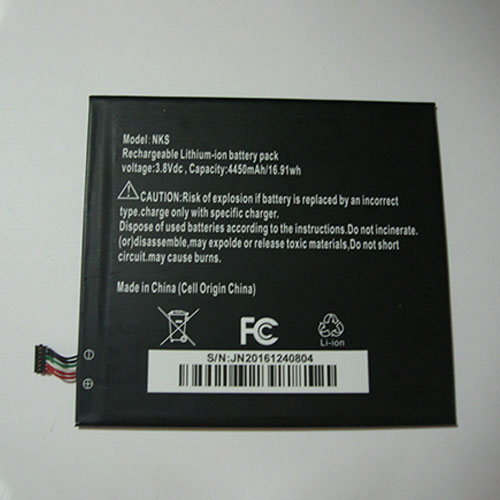
Cheap Sprint NKS Li-ion Cell Phone battery, Brand New NKS replacement battery for Sprint Slate 8 AQT80

4450mAh/16.91Wh 3.8V/4.35V Sprint NKS Batteries for Sprint Slate 8 AQT80, Sprint NKS Cell Phone battery is a brand new,100% Compatible original and replacement Laptop battery,Purchase wholesale and retail NKS with high quality and low price!

NKS Battery sprint Li-ion 3.8V/4.35V 4450mAh/16.91Wh

NKS

Specifications

  • Brand:Sprint
  • Capacity :4450mAh/16.91Wh
  • Voltage :3.8V/4.35V
  • Type :Li-ion
  • Battery Cell Quality: Grade A
  • Descriptive: Replacement Battery – 1 Year Warranty
  • Description: Brand New, 1 Year Warranty! 30-Days Money Back! Fast Shipping!

How we test this Sprint NKS Battery Li-ion 3.8V/4.35V 4450mAh/16.91Wh

Step 1: Make sure customer bought the correct battery.
Step 2: Check battery’s appearance and interface.
Step 3: Test battery charger and recharger function.
Step 4: Charger the battery to 100% and recharger to 0% to get real battery capacity
Step 5: Use Ev2300 to check the voltage difference of each goroup cells.
Step 6: Charger battery power more than 30%.
Step 7: Package battery carefully and send out

Compatible Part Numbers:

NKS

Compatible Model Numbers:

Sprint Slate 8 AQT80

How much do you know about how to run laptop well as any place? The follow Tips cut way back on protecting battery life.


1). Please recharge or change your Cell Phone battery when battery power low.
2). Using Li-Ion Replacement Sprint NKS Cell Phone Battery for your notebook which can work longer time than Non Li-ion one.
3). It is better to defragmentation regularly for your Cell Phone battery life.
4). In order to reduce the laptop power consumpition, you can use some optical drive spin-down and hard drive in your Cell Phone .
5). Please keep your laptop in sleep or standby model without long time using, which both save the Replacement Sprint NKS Cell Phone Battery power and extend battery using life.
6). Leave your battery in a dry and cool condition when without using.
7). When you rarely or generally plugged in fixed power using, Please take down your battery to avoid hurting battery life.

Hot Products

11.1V/12.4v 2300mah BOSE 404600 for Bose SOUNDLINK I II III7.4V 2230mAh/17Wh BOSE 063404 for 0634043.7V/4.2V 1750MAH/6.5WH AMAZON GP-S10-346392-0100 for AMAZON KINDLE 3 3G WIFI Kindle3.8V 6300mAh/23.94Wh AMAZON 2955C7 for Amazon Kindle Fire HD 10.1 7th15.4V 5209mAh RAZER RC30-0248 for RAZER Blade 15 2018 RZ09-023863.8 V 1300 mAh AMAZON MC-305070 for AMAZON Kindle Voyage7.7V 37Wh/4810mAh ACER AP16M5J for ACER A315-51-51SL N17Q1 SERIES3.85V/4.4V 3080MAH/11.86WH ALCATEL TLp030JC for Alcatel A3 XL 9008j7.4V 2230mAH/17Wh BOSE 061384 for BOSE SOUNDLINK Mini Series3.8V 2930mAh/11.1Wh NETGEAR W-7 for Netgear AirCard 790S 790SP 810

Cheap Vertu BPL-9V Li-ion Cell Phone battery, Brand New BPL-9V replacement battery for VERTU Aster Signature Touch V03

2275mAh 3.8V/4.35V Vertu BPL-9V Batteries for VERTU Aster Signature Touch V03, Vertu BPL-9V Cell Phone battery is a brand new,100% Compatible original and replacement Laptop battery,Purchase wholesale and retail BPL-9V with high quality and low price!

BPL-9V Battery vertu Li-ion 3.8V/4.35V 2275mAh

BPL-9V

Specifications

  • Brand:VERTU
  • Capacity :2275mAh
  • Voltage :3.8V/4.35V
  • Color:white
  • Type :Li-ion
  • Battery Cell Quality: Grade A
  • Descriptive: Replacement Battery – 1 Year Warranty
  • Description: Brand New, 1 Year Warranty! 30-Days Money Back! Fast Shipping!

How we test this Vertu BPL-9V Battery Li-ion 3.8V/4.35V 2275mAh

Step 1: Make sure customer bought the correct battery.
Step 2: Check battery’s appearance and interface.
Step 3: Test battery charger and recharger function.
Step 4: Charger the battery to 100% and recharger to 0% to get real battery capacity
Step 5: Use Ev2300 to check the voltage difference of each goroup cells.
Step 6: Charger battery power more than 30%.
Step 7: Package battery carefully and send out

Compatible Part Numbers:

BPL-9V

Compatible Model Numbers:

VERTU Aster Signature Touch V03

How much do you know about how to run laptop well as any place? The follow Tips cut way back on protecting battery life.


1). Please recharge or change your Cell Phone battery when battery power low.
2). Using Li-Ion Replacement Vertu BPL-9V Cell Phone Battery for your notebook which can work longer time than Non Li-ion one.
3). It is better to defragmentation regularly for your Cell Phone battery life.
4). In order to reduce the laptop power consumpition, you can use some optical drive spin-down and hard drive in your Cell Phone .
5). Please keep your laptop in sleep or standby model without long time using, which both save the Replacement Vertu BPL-9V Cell Phone Battery power and extend battery using life.
6). Leave your battery in a dry and cool condition when without using.
7). When you rarely or generally plugged in fixed power using, Please take down your battery to avoid hurting battery life.

Hot Products

11.1V/12.4v 2300mah BOSE 404600 for Bose SOUNDLINK I II III7.4V 2230mAh/17Wh BOSE 063404 for 0634043.7V/4.2V 1750MAH/6.5WH AMAZON GP-S10-346392-0100 for AMAZON KINDLE 3 3G WIFI Kindle3.8V 6300mAh/23.94Wh AMAZON 2955C7 for Amazon Kindle Fire HD 10.1 7th15.4V 5209mAh RAZER RC30-0248 for RAZER Blade 15 2018 RZ09-023863.8 V 1300 mAh AMAZON MC-305070 for AMAZON Kindle Voyage7.7V 37Wh/4810mAh ACER AP16M5J for ACER A315-51-51SL N17Q1 SERIES3.85V/4.4V 3080MAH/11.86WH ALCATEL TLp030JC for Alcatel A3 XL 9008j7.4V 2230mAH/17Wh BOSE 061384 for BOSE SOUNDLINK Mini Series3.8V 2930mAh/11.1Wh NETGEAR W-7 for Netgear AirCard 790S 790SP 810

Lenovo releases first Fedora Linux ThinkPad laptop

For years, ThinkPads, first from IBM and then from Lenovo, were Linux users’ top laptop pick. Then, in 2008 Lenovo turned its back on desktop Linux. Lenovo has seen the error of its ways. Today, for the first time in much too long, Lenovo has released a ThinkPad with a ready-to-run Linux. And, not just any Linux, but Red Hat’s community Linux, Fedora.

Red Hat Senior Software Engineering Manager Christian Schaller wrote: 

This is a big milestone for us and for Lenovo as it’s the first time Fedora ships pre-installed on a laptop from a major vendor and it’s the first time the world’s largest laptop maker ships premium laptops with Linux directly to consumers. Currently, only the X1 Carbon is available, but more models are on the way and more geographies will get added too soon.

First in this new Linux-friendly lineup is the X1 Carbon Gen 8. It will be followed by forthcoming versions of the ThinkPad P1 Gen2 and ThinkPad P53. While ThinkPads are usually meant for business users, Lenovo will be happy to sell the Fedora-powered X1 Carbon to home users as well.

The new X1 Carbon runs Fedora Workstation 32. This cutting-edge Linux distribution uses the Linux Kernel 5.6. It includes WireGuard virtual private network (VPN) support and USB4 support. This Fedora version uses the new GNOME 3.36 for its default desktop.

The system itself comes standard with a 10th Generation Intel Core 1.6Ghz i5-10210U CPU, with up to 4.20 GHz with Turbo Boost. This processor boasts 4 Cores, 8 Threads, and a 6 MB cache.

It also comes with 8MBs of LPDDR3 RAM. Unfortunately, its memory is soldered in. While that reduces the manufacturing costs, Linux users tend to like to optimize their hardware and this restricts their ability to add RAM. You can upgrade it to 16MBs, of course, when you buy it for an additional $149. 

For storage, the X1 defaults to a 256GB SSD. You can push it up to a 1TB SSD. That upgrade will cost you $536. 

The X1 Carbon Gen 8 has a 14.0″ Full High Definition (FHD) (1920 x 1080) screen. For practical purposes, this is as high-a-resolution as you want on a laptop. I’ve used laptops with Ultra High Definition (UHD), aka 4K, with 3840×2160 resolution, and I’ve found the text to be painfully small. This display is powered by an integrated Intel HD Graphics chipset.

For networking, the X1 uses an Intel Wi-Fi 6 AX201 802.11AX with vPro (2 x 2) & Bluetooth 5.0 chipset. I’ve used other laptops with this wireless networking hardware and it tends to work extremely well. 

These days desktop Linux supports over 99% of the PC hardware. To close that gap entirely, Lenovo is working with its third-party hardware component vendors to make sure they supply the appropriate Linux drivers. Lenovo also uses the Linux Vendor Firmware Service (LVFS) to make sure there’s current firmware available for both their main system and all its components such as the X1’s 720p Webcam and fingerprint sensor.

The entire default package has a base price of $2,145. For now, it’s available for $1,287. If you want to order one, be ready for a wait. You can expect to wait three weeks before Lenovo ships it to you. 

It may be worth the wait. Schaller loves the new Fedora-powered ThinkPad. Schaller wrote:

I am very happy with the work that has been done here to get to this point both by Lenovo and from the engineers on my team here at Red Hat. For example, Lenovo made sure to get all of their component makers to ramp up their Linux support and we have been working with them to both help get them started writing drivers for Linux or by helping add infrastructure they could plug their hardware into. We also worked hard to get them all set up on the Linux Vendor Firmware Service so that you could be assured to get updated firmware not just for the laptop itself, but also for its components.

We also have a list of improvements that we are working on to ensure you get the full benefit of your new laptops with Fedora and Lenovo, including working on things like improved power management features being able to have power consumption profiles that include a high-performance mode for some laptops that will allow it to run even faster when on AC power and on the other end a low power mode to maximize battery life. As part of that, we are also working on adding lap detection support, so that we can ensure that you don’t risk your laptop running too hot in your lap and burning you or that radio antennas are running too strong when that close to your body.

So I hope you decide to take the leap and get one of the great developer laptops we are doing together with Lenovo. This is a unique collaboration between the worlds largest laptop maker and the world’s largest Linux company. 

This isn’t Lenovo’s only pro-Linux desktop move. Lenovo is planning to certify its entire workstation portfolio for top Linux distributions from Canonical and Red Hat — “every model, every configuration.” While that’s not every Lenovo PC — the Ideapad family isn’t included — that’s still impressive. It will also preload its entire portfolio of ThinkStation and ThinkPad P Series workstations with both Red Hat Enterprise Linux (RHEL) and Ubuntu Long Term Support (LTS).

With these moves, Lenovo is joining Dell, with its support for Ubuntu Linux-powered developer laptops, such as its latest Dell XPS 13 Developer Edition, in supplying programmers with high-end hardware. Dell already offers a wide variety of top-rank Linux-powered laptops and workstations. With Lenovo heading into the same space, we can hope for better and less expensive PCs from both companies. 

How to take screenshots in Windows 10

From keyboard shortcuts to built-in apps, there’s plenty of ways to take screenshots on a Windows 10 PC.

There’s any number of reasons why you may need to take a screenshot on a Windows 10 PC. You may need to send an error report to IT, capture graphics and images for a presentation, or create a tutorial on how to take screenshots in Windows 10. 

No matter the reason you’re trying to take screenshots in Windows 10, there are options. Microsoft didn’t make all of them super simple, and you’ll need to bring in additional apps like Paint to actually save the screen captures you take.

There are also a couple of Windows apps you can use to take screenshots if you’re averse to keyboard shortcuts or having to paste captured content from the Windows clipboard to a separate app for editing manually. Whichever way you prefer, there are options.

How to take a full screen screenshot in Windows 10 with keyboard shortcuts

The simplest, and most obvious way to take a screenshot in Windows 10 is probably the button that everyone has on their keyboard: Print Screen, which may also be labeled PrtScrn, PrSc, or some similarly abbreviated name. 

Pressing Print Screen doesn’t do anything obvious, so you’d be understandably confused if you were hoping a small thumbnail would appear in the lower right of the screen, ala macOS, indicating an image has been captured. Instead of actually taking a picture, Print Screen copies the contents of your entire screen to the clipboard, much like you highlighted some text and pressed Ctrl + C. 

In order to create the image you captured with Print Screen you’ll have to open Word, Paint, or some other program where you can paste an image file and then save it with the name and extension of your choice. 

If you want to skip the copying and pasting, you’re in luck: Pressing Windows Key + Print Screen will capture the entire screen and automatically save it as an image. You’ll also get some visual feedback indicating it’s been captured, as the screen will briefly dim. 

In order to find images captured using Windows Key + Print Screen, navigate to your Pictures folder and look for the Screenshots subfolder. 

Note: If you have a Microsoft OneDrive account, be sure to check your OneDrive Pictures folder for Screenshots, as it may default there instead of to your local Pictures folder (Figure A).

Figure A

How to capture the active window in Windows 10 with keyboard shortcuts

If you want to capture just the active window, you need to press Alt + Print Screen. Again, you won’t get any visual feedback indicating it was copied successfully, but you’ll be able to paste the image into whichever app you used to take a full screen screenshot.

How to capture a screen selection in Windows 10 with keyboard shortcuts

If you just want to capture a small portion of the screen you can do so by pressing Windows Key + Shift + S. When you do this you’ll see a small toolbar appear at the top of the screen with several snipping options (Figure B): The first snips a square shape by clicking and dragging, the second allows you to draw a freeform shape, the third takes a picture of the active window, and the fourth snips a copy of the full screen. 

Figure B

This is arguably the best keyboard shortcut option for taking screenshots, as it’s the only one that presents you with a thumbnail at the bottom right of the screen saying an image has been captured (Figure C). Clicking on the thumbnail will open the image in Snip & Sketch, which will be discussed more below. 

Figure C

Taking Windows 10 screenshots using Windows apps

There are two options when it comes to taking screenshots with built-in Windows applications: Snip & Sketch, which was released for Windows 10 with the October 2018 update, and the tried-and-true Windows Snipping Tool, which has been a part of Windows since Vista.

You can find both tools by typing in the Windows search bar (Figure D), or by finding it in the application list of the Start menu. 

Figure D

Snip & Sketch (Figure E) is both an image editing/markup tool and an image capture app. Clicking on New in Snip & Sketch will bring up the same menu as Windows Key + Shift + S, so think of opening it directly as an alternative to remembering that hotkey combination—it even reminds you of that when you open it.

Figure E

Next to the New button there’s an arrow that will allow you to take a snip with a time delay of three or 10 seconds. Along with delay options are basic markup functions, a crop tool, and a share option.

As for the Windows Snipping Tool, it’s essentially the same thing as Snip & Sketch with a slightly older user interface (Figure F).

Figure F

Snipping Tool even reminds you that it’s going to be phased out eventually, but it has coexisted with Snip & Sketch for a couple of years already with no indication it’s going to disappear anytime soon. 

Aside from its look, the only big differences between Snip & Sketch and Snipping Tool are the delay option, which ranges from one to five seconds in one-second increments, and the lack of image editing options contained in Snipping Tool. All you can really do with an image captured in Snipping Tool is mark it up with a pen, highlight it, and erase marks you’ve made.

With Snip & Sketch’s tight integration with Windows keyboard shortcuts it and its corresponding Windows Key + Shift + S keyboard shortcut it’s the most user friendly method of taking screenshots in Windows 10. 

MSI Releases Combo PI V2 1.0.8.1 BIOS Updates for X570, B550 and A520 series motherboards

MSI has started distributing optimized BIOS updates for the X570, B550 and A520 series motherboards. Combo PI V2 1.0.8.1 BIOS are released and able to download successively from now throughout September.

The MSI news-release is very shot but the new BIOS updates affects the following:

Optimized memory compatibility

Optimized overclocking ability of memory

Mitigate S3 resume issue

Solved RAID issue of B550 platform

Now supports UMA setting for Ryzen 4000 G-Series (Renoir) processors

The release schedule is listed below, BIOS for all 500 series motherboards will be ready in September.

Big Navi Radeon 6000 Branding Unearthed In AMD Custom Fortnite Map And How To Find It

Only a few days ago, AMD worked with Fortnite Creative Island modder MAKAMAKES to create the custom AMD Battle Arena in Fortnite creative. Players have the option of playing three different game modes, and among the maps, there apparently was a baked-in Easter egg referencing Big Navi model numbering, or at least so it seems.

Just this evening, a personality who appears to be an AMD-sponsored Facebook streamer, GinaDarling, was live playing and streaming Fortnite on this new map, when she discovered the AMD-planted Easter egg you can see below. It certainly seems like it is referencing the upcoming Big Navi lineup from AMD, as she had to enter code 6000 at one point in her trials and tribulations to get to the egg. Perhaps we can expect an announcement from AMD soon now that this has been triggered? The model numbering certainly makes sense. Logically, we have Radeon RX 5000, 5500 and 5700 series products, so where do we go from here? You’re quick, indeed: 6000.

To figure out how this Easter egg was found, you also have to get into the AMD Battle Arena. The AMD Battle Arena map is a Fortnite map where AMD fans get to duke it out in an AMD-themed stadium. Full of seats, cool lights, and a phone booth surrounding the playing floor, the arena looked pretty slick under the night sky texture. AMD posted a video about the arena which you can see below, but that phone booth is key. Take a gander here and we’ll explain more:

As the video shows, there are a few options for game play:

Free for All
First player to 30 eliminations, wins.

Unlimited respawns.

Weapons spawn randomly across the map.

Box Fights
Last player standing wins.

Eliminate all other players to win.

Four minutes per round, five rounds total

Capture the Flag
Capture the enemy flag and bring it back to your own base to win.

You only have one life per round.

Five minutes per round, three rounds total.

You must get into either a Free-For-All or Capture The Flag Mapto find the Easter egg.

Once you are in either of those types of matches, do the following steps to see the Easter egg for yourself:

Run along the highest wall directly parallel to the phone booth and jump across the border (if you need help, see below)

Answer the phone with middle mouse click

Finish the parkour

Enter code “6000” at the end terminal area.

And that is it!

With Big Navi not so far away, it does not come as a surprise that AMD is trying to garner some attention. In conjunction with this Fortnite map being released, a contest is being run as well. If a user catches a cool in-game action clip, they can share that clip on social media with the tag #AMDSweepstakesEntry for a chance to win a Maingear PC powered by AMD. This winnable PC is a little less beefy than the Maingear machine we reviewed recently, but it is still awesome nonetheless.

In any case, if you want to get into these games and find the Easter egg for yourself, you can do so by going into creative mode and entering the code 8651-9841-1639 to get to the map. If you want to see Gina’s reaction to finding this Easter egg, you can view her stream here. No matter what you do, stick around HotHardware for any upcoming news on Big Navi.