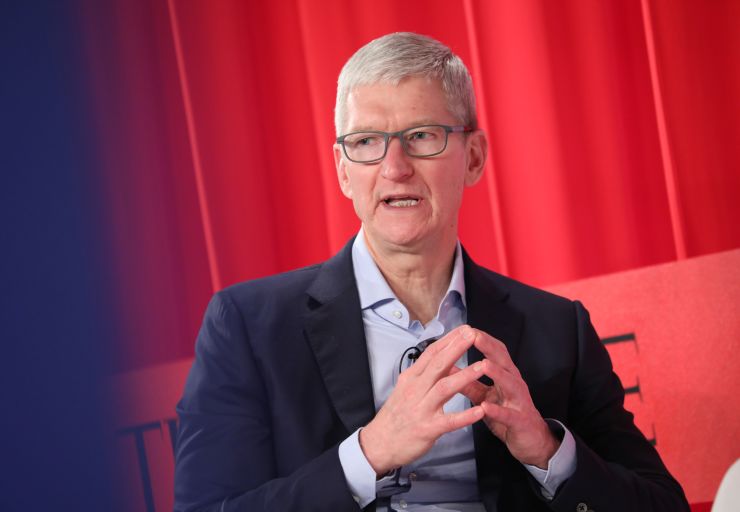
Tim Cook thinks people should get off theiriPhones and decrease their engagement with apps. The Apple CEO, speaking at
the TIME 100 Summit today, was discussing the addictive nature of our mobile
devices and Apple’s role in the matter when he made these comments. He said the
company hadn’t intended for people to be constantly using their iPhones, and
noted he himself has silenced his push notifications in recent months.
It’s certainly an interesting claim, given
that Apple designed a platform that allowed app developers to constantly ping
their users with the most inane notifications — from getting a new follower on
a social app to a sale in a shopping app to a new level added to a game and so
much more.
An app notification platform could have
instead been crafted to allow app developers to notify users in batches, at
designed intervals within users’ control. For example, users could have
specified that every day at noon they’d like to check in on the latest from
their apps.
Or, in building out the iOS App Store,Apple could have implemented a “news feed” of sorts — a dedicated channelwherein users could opt to check in on all the latest news from their installedapps.
Or perhaps Apple could have structured a
notification platform that would have allowed users to pick between different
classes of notifications. Urgent messages — like alerts about a security breach
— could have been a top-level tier; while general information could have been
sent as a different type of notification. Users could have selected which types
of alerts they wanted, depending on how important the app was to them.
But the fact of the matter is that Apple’s
notification platform was built with the idea of increasing engagement in mind.
It’s disingenuous to say it was not.
At the very least, Apple could admit that
it was a different era back then, and didn’t realize the potential damage to
our collective psyche that a continually buzzing iPhone would cause. It could
point out how it’s now working to fix this problem by putting users back in
control, and how it plans to do more in the future.
Instead, it created a situation where
users had to turn to the only defense left
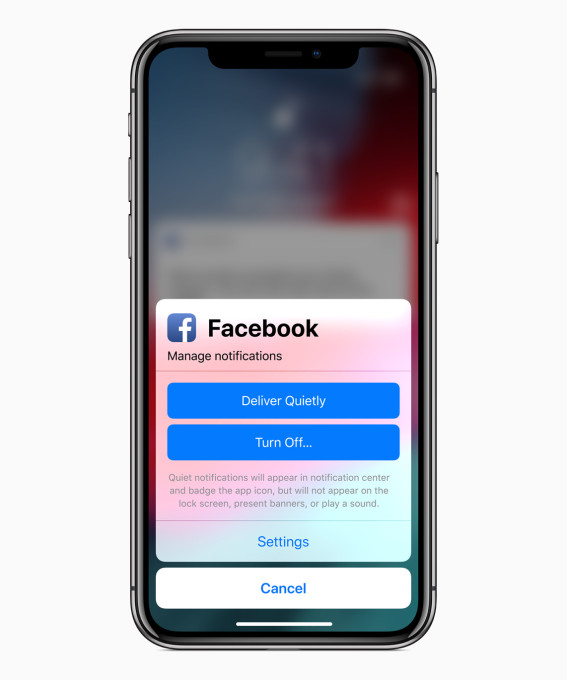
to them: switching off pushnotifications entirely. Today, when users install new apps they
often say “No” to push notifications. And with Apple’s new tools to control
notifications, users are now actively triaging which apps can get in touch.
In fact, that’s what Tim Cook says he
did, too.
“If you guys aren’t doing this — if you
have an iPhone and you’re not doing it, I would encourage you to really do this
— monitor these [push notifications],” the CEO suggested to the audience.
“What it has done for me personally is I’ve
gone in and gutted the number of notifications,” Cook said. “Because I asked
myself: ‘Do I really need to be getting thousands of notifications a day?’ It’s
not something that is adding value to my life, or is making me a better person.
And so I went in and chopped that.”
Yep. Even
Apple’s CEO is done with all the spam and noise from iPhone apps.
The comment, of course, was supposed to be
a veiled reference to the addictive nature of some
apps — social media apps in particular, and especially
Facebook. Today, Apple throws barbs atFacebook any time it can, now that the company has fallen out of
public favor due to its ongoing data privacy violations and constantscandals.
But a more truthful telling of the iPhone’s
past would recall that Facebook’s app — and all its many notifications — was
originally a big selling point for Apple’s mobile device.
The fact that Facebook — and every otherapp — later leveraged the iOS push notification platform to better its own
business without regard to how that would impact users isn’t entirely app
developers’ collective fault. The notification platform itself had left the
door wide open for that sort of psychological abuse to occur, simply because of
its lack of user-configured, user-friendly controls.
Above: The App Store at launch, via The NYT
A decade after the App Store launched,
Apple finally started to dial back on the free-for-all on user attention.
Now Tim Cook wants to have us believe that
Apple had never wanted to cause any of
this addiction and distraction — despite having created the very platform that
made it all possible in the first place, which in turn, helped sell devices.
“Every time you pick up your phone, it
means you’re taking your eyes off whoever you’re dealing with, are talking
with, right?,” Cook continued. “And if you’re looking at your phone more than
you’re looking at somebody else’s eyes, you’re doing the wrong thing,” he said.
“We want to educate people on what they’re doing. This thing will improve
through time, just like everything else that we do. We’ll innovate there as we
do in other areas.”
Except, of course, for those 10 years when
it was.